
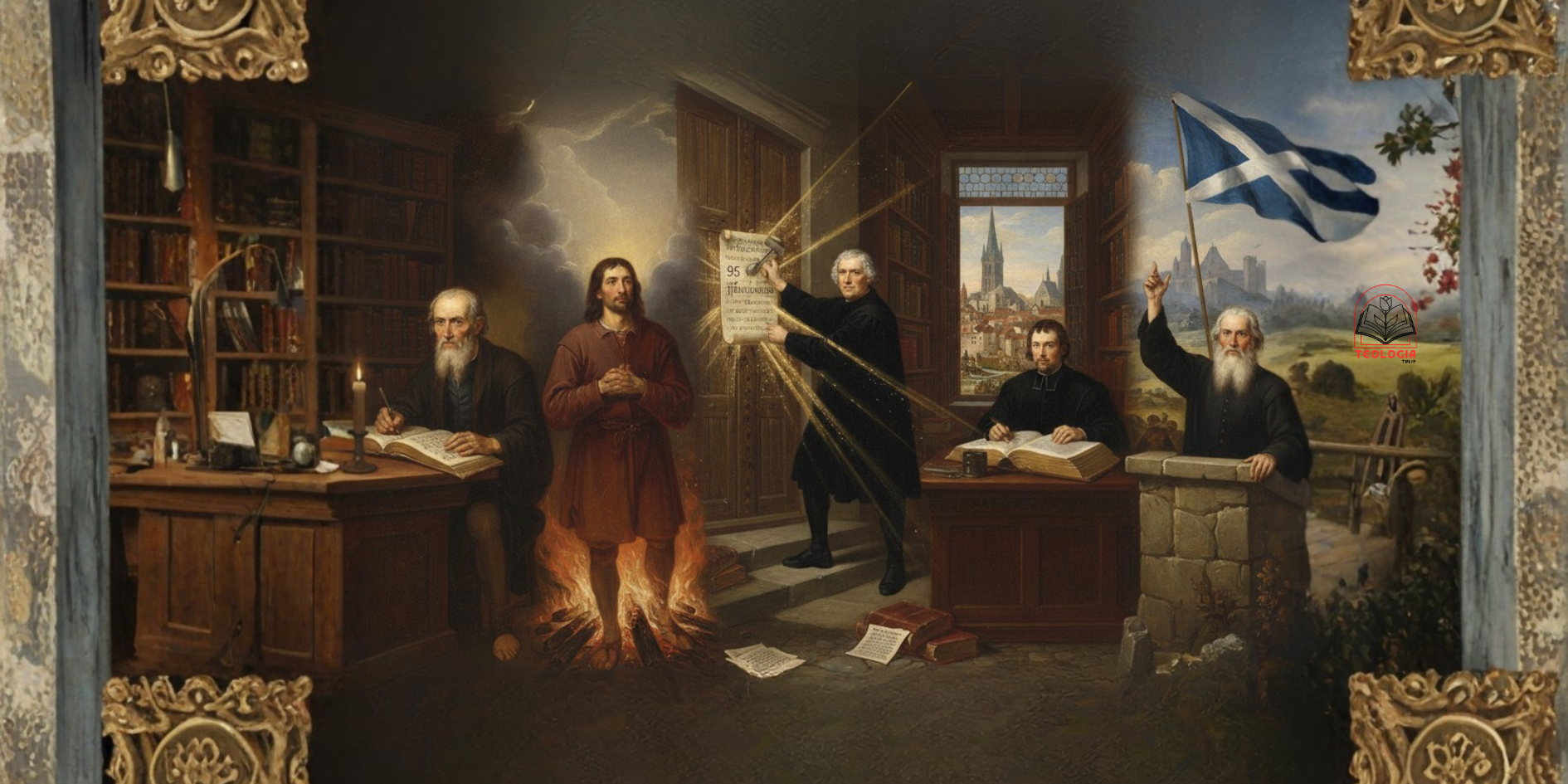
The Protestant Reformation was one of the most significant movements in Western history. Beginning in the 16th century, it transformed religion, politics, culture, and European society. However, its roots go far back before Martin Luther and his famous protest in 1517. Various movements and individuals—known as pre-reformers—paved the spiritual and intellectual way for the Reformation.
Early Movements of Renewal
From the earliest centuries of Christianity, there were voices calling for a return to the original purity of the Gospel. However, during the Middle Ages, as the Catholic Church accumulated power and wealth, groups arose that denounced ecclesiastical corruption, abuses of authority, and the gap between Christ’s teachings and institutional practice.
One of the oldest and most significant movements was that of the Waldensians.
The Waldensians: Precursors of the Reformation
The Waldensians emerged in the 12th century, founded by Peter Waldo, a merchant from Lyon, France. After a profound personal conversion, Waldo renounced his possessions and began preaching evangelical poverty, direct reading of the Bible, and obedience to Christ above human authorities.
The Waldensians promoted the translation of the Bible into local languages, something forbidden by the Church at that time. They also questioned practices such as the veneration of saints, purgatory, and the absolute power of the pope. Persecuted by the Inquisition, many fled to the mountainous regions of northern Italy, where they endured for centuries. Their emphasis on the Bible as the sole authority anticipated the central ideas of the Protestant Reformation.
Pre-Reformers: Wycliffe, Hus, and Savonarola
Between the 14th and 15th centuries, other leaders arose who challenged the religious status quo:
- John Wycliffe (1320–1384), an English theologian, criticized the wealth of the clergy, the papacy, and indulgences. By translating the Bible into Middle English, he proclaimed that Scripture should be accessible to everyone. His followers, the Lollards, spread his ideas throughout England and beyond.
- Jan Hus (1372–1415), in Bohemia (modern-day Czech Republic), was inspired by Wycliffe and denounced the moral corruption of priests and the sale of indulgences. He was excommunicated and ultimately burned at the stake for heresy at the Council of Constance, becoming a martyr for evangelical truth. His followers, the Hussites, kept the reforming spirit alive throughout the 15th century.
- Girolamo Savonarola (1452–1498), a Dominican friar in Florence, preached against the moral decay of the Church and political corruption. Although he did not break with Rome, his call for spiritual purification and condemnation of ostentation foreshadowed the reformist spirit.
Martin Luther and the Beginning of the Reformation
On October 31, 1517, the Augustinian monk Martin Luther nailed his 95 Theses to the door of the Castle Church in Wittenberg. In doing so, he challenged the sale of indulgences and papal authority, unleashing an unstoppable movement.
Luther did not seek to divide the Church but to reform it from within. However, his insistence that salvation comes through faith and not works, and that the Bible is the sole source of authority (principle of Sola Scriptura), ultimately created a new branch of Christianity: Protestantism.
Legacy and Expansion
The Reformation spread rapidly across Europe thanks to the printing press and rising literacy. Reformers such as Ulrich Zwingli in Switzerland, John Calvin in Geneva, and John Knox in Scotland developed various streams of Protestant thought.
Earlier movements—the Waldensians, Lollards, and Hussites—were recognized as the spiritual foundations upon which Luther and others built. In fact, the Waldensians eventually integrated into Reformed Protestantism during the 16th century.
Conclusion
The Protestant Reformation was not an isolated event but the result of centuries-long searching for spiritual authenticity and faithfulness to the Gospel. The Waldensians, Wycliffe, Hus, and other precursors paved the way for a change that transformed the history of the Christian faith. Their legacy endures in the emphasis on Scripture, freedom of conscience, and personal responsibility before God.


