
The Westminster Confession of Faith: The Story of a Landmark Work
In the first half of the 17th century, England experienced a period of significant religious and political turmoil. The Protestant Reformation had deeply influenced Europe, and the Church of England found itself balancing between Catholic tradition and Reformed theology. It was in this environment that one of the most important documents of Reformed theology, the Westminster Confession of Faith, emerged.
Historical Context: Why the Westminster Confession Was Needed
In 1643, during the English Civil War, the English Parliament, composed mainly of Puritans and Reformed believers, sought a doctrinal standard to unify church teaching. The Churches of Scotland, allied with Parliament, proposed a confession that reflected Scottish Presbyterian theology influenced by John Calvin. This led to the convening of the Westminster Assembly.
The English Civil War and Puritan Influence
The political and religious tensions were palpable. Puritans sought not only theological reform but also practical guidance for daily Christian living. A doctrinal document was necessary to standardize church governance and teaching during this turbulent period.
Collaboration with the Church of Scotland
Scotland played a crucial role in the Westminster Assembly. Leaders like Alexander Henderson acted as mediators, insisting that the Bible remain the ultimate authority in all debates. Henderson often reminded colleagues:
“The Word of God is our guide, not our own desires.”
The Westminster Assembly and Its Debates
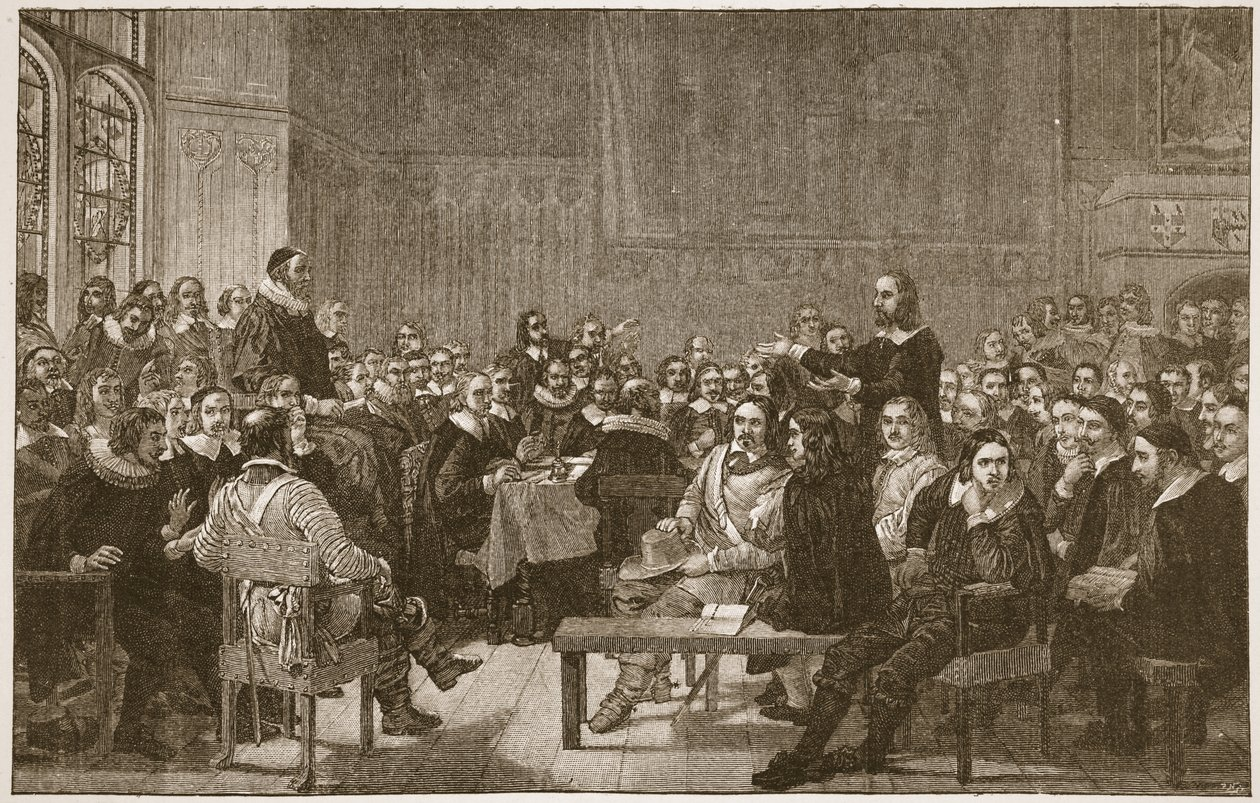
The assembly, held at Westminster Abbey in London in July 1643, consisted of about 120 theologians and pastors, including Samuel Rutherford. Over several years, they debated key topics such as the nature of God, predestination, the sacraments, and church governance.
Key Figures: Samuel Rutherford and Alexander Henderson
- Samuel Rutherford: Known for theological clarity and his skill in drafting precise documents.
- Alexander Henderson: Praised for patience and insistence on doctrinal unity.
Both were instrumental in ensuring the Westminster Confession of Faith reflected Reformed theology without sacrificing clarity for congregations.
Anecdotes from Long Sessions
The assembly sessions were long and exhausting, often leaving theologians forgetting to eat. Amid tension, moments of humanity and humor emerged, showing the devotion of those behind the doctrine.
Drafting and Final Approval (1643–1646)
After nearly three years, the Westminster Confession was completed in 1646, along with the Larger and Shorter Catechisms and the Canons and Declarations of the Church of Scotland. Together, these formed a coherent doctrinal system guiding both teaching and devotional life in Reformed churches.
Catechisms and Complementary Documents
The catechisms were designed for leaders and laity, providing practical understanding of the Reformed faith. They were widely taught in homes and Sunday schools, fostering early biblical literacy and doctrinal knowledge.
Immediate Impact in England and Scotland
Although some resistance arose in England, particularly among Episcopalians and Royalists, the Confession quickly became the official standard in Scotland and in many Presbyterian churches worldwide. Its clarity enabled study and application across diverse contexts.
Legacy of the Westminster Confession of Faith
The Westminster Confession has had a lasting impact for centuries. Today, it continues to guide millions of Presbyterian and Reformed believers worldwide. The Confession reflects not only Reformed theology but also the dedication, prayer, and collaboration of committed leaders.
Influence on Presbyterian Churches Worldwide
From the United States to Africa and Asia, the Confession shapes doctrinal teaching and discipleship. Seminaries and Christian universities study it as a historical and theological reference, and many congregations continue teaching its catechisms to new generations.
Contemporary Relevance
The Westminster Confession remains relevant because it balances doctrinal depth with pedagogical clarity. Studying it today allows believers to understand both Reformed theology and the historical context of faithful men and women who trusted in the Word of God during times of challenge.
Conclusion
The Westminster Confession of Faith emerged from a period of tension and need, through intense debate, collaboration between English and Scottish leaders, and a deep commitment to Scripture. Its enduring legacy demonstrates how faith and dedication can produce documents that guide generations, making Westminster a landmark in the history of Christianity.